
Building a Tangible Chess Experience for Visually Impaired Players
Designing an accessible chess experience using a tangible board, voice assistance, and haptic feedback.
Overview
About the project
Case study
About the project
Overview
Designing for independent play
We designed an accessible chess system around one principle: players should be able to take in information and act on it without leaving their train of thought.
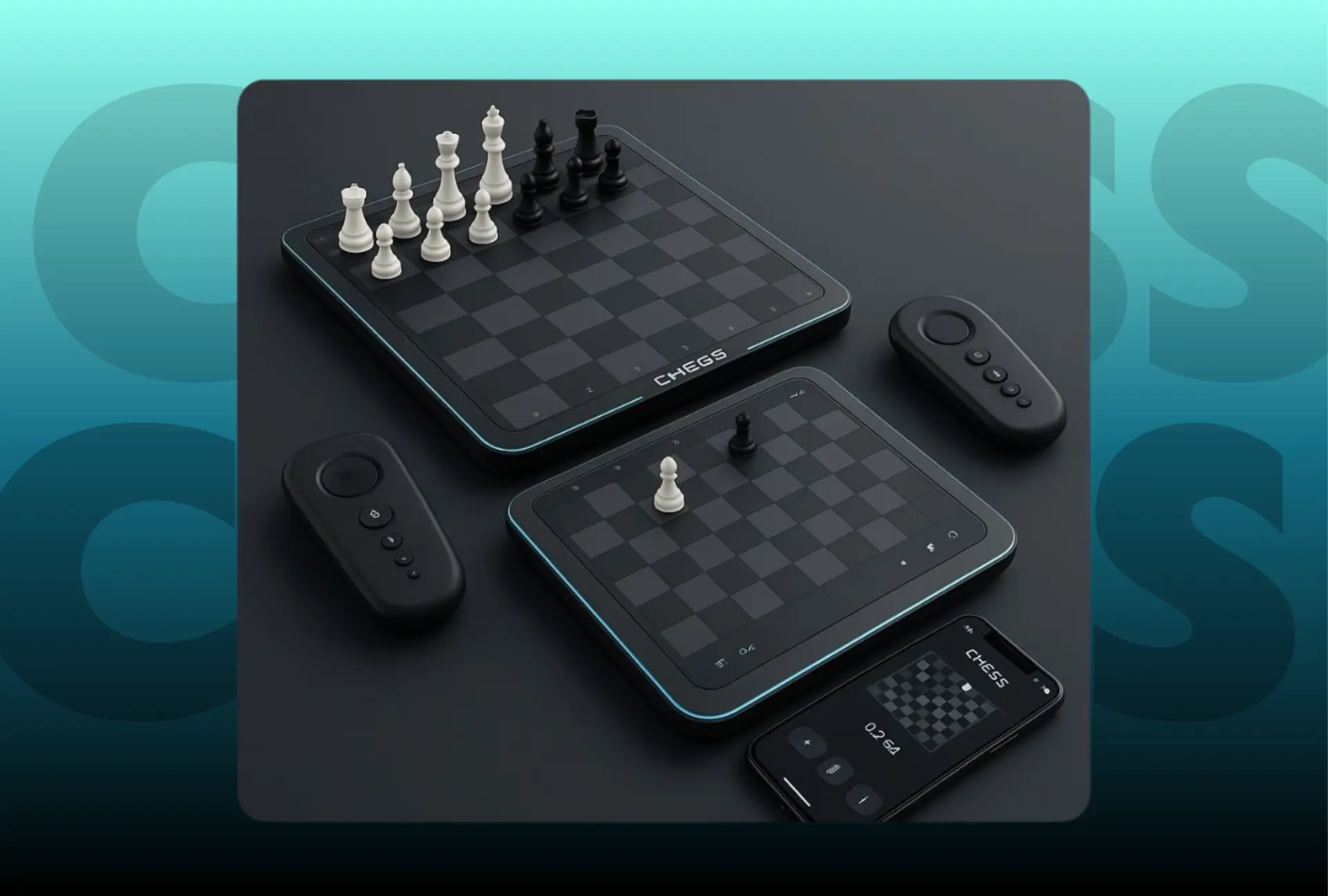
The MVP combines automatic move recording, voice interaction and vibration feedback to support real-time awareness of the game.
+18%
perceived usefulness with haptic feedback
Up to 90%
reported satisfaction with enhanced tools
88–94%
recognition accuracy for haptic Braille and tactile patterns
Results reported in the supplied project summary, based on testing with 10+ blindfolded chess players and 5 visually impaired players. These figures describe this study, not all visually impaired players.
Case study
Problem
Problem
Keeping the game in mind
Our research highlighted the effort involved in remembering moves, checking positions, managing time and requesting information. These interruptions can pull attention away from strategy.
- Keeping track of time
- Remembering past moves
- Confirming the board state
- Staying in flow during move announcements
- Accessing digital chess resources
- Understanding the board without visual cues
FIDE's rules for play with visually disabled players cover adapted boards, move announcements, recording and assistance. FIDE Laws of Chess, Appendix D
How might we
Give visually impaired players real-time game awareness, so they can stay in flow and play independently?
Case study
Research
Reviewed documentaries, articles, interviews and adapted chess rules. FIDE Laws of Chess, Appendix D documents board adaptations, announcements and recording. Player profiles and testing figures below are reported in the supplied project summary, not independently verified.
Case study
Persona: user needs and requirements
Research
Listen before designing
We began with documentaries, articles, IBCA chess rules and video interviews with visually impaired players.
Five recurring themes shaped the direction: manual move recall, dependence on board-state confirmation, multi-step interactions, missing real-time feedback and interruptions from checking positions by touch.
Blind player
Nick
Board-state awareness
Keeping track of where an opponent's pieces have moved.
Partially sighted player
Jessica
Automatic move recording
Staying focused without pausing to write down every move.
Visually impaired player
Winston
Modern, familiar tools
Improving the experience while respecting the game's traditions.
Player profiles provided in the project summary.
Case study
Solution
Solution
One game. Multiple ways to connect.
Automatic move recording
Motion detection records moves so players can focus on the game instead of keeping a manual log.
Voice and audio
Announce or confirm moves, request board information and hear real-time updates.
Private haptic feedback
Vibration delivers time warnings and board feedback without interrupting the opponent.
Dual boards
Each player interacts with their own board without disturbing the other player's setup.
Custom controllers
Hands-on controls support interaction without repeatedly checking the board by touch.
Companion app
Digital move tracking and timers, available through voice or the screen.
Design decision
Voice plus vibration, not audio alone
Spoken feedback helps confirm moves, but constant audio can distract an opponent and interrupt concentration. We reserved voice for moves and requests, and vibration for time warnings and board feedback.
Voice: explicit information
Announce a move, confirm an action or ask for the current board state.
Vibration: private awareness
Receive time warnings and board feedback without adding more spoken interruptions.
Case study
Testing
Validation
Testing beyond visual cues
We tested with 10+ blindfolded chess players and 5 visually impaired chess players. The project summary reports improved perceived usefulness with haptics, satisfaction with the enhanced tools and recognition of tactile patterns.
Blindfolded testing helped explore interactions without sight, but it does not replace the lived experience of visually impaired players. The next step is broader testing with those players in live tournament conditions.
What I would do next
- Expand testing with more visually impaired players.
- Validate the system during live tournament play.
- Refine controller ergonomics for longer games.
Case study
Next steps
Expand testing with visually impaired players, evaluate tournament use and refine controller ergonomics for longer games.
Reflection
A familiar game, a different perspective
I've played chess since I was 10. When I tried playing blindfolded for this project, I realized how much I depended on visual cues. It was humbling, and it reshaped how I approached the work.
This project was about designing dignity, independence and inclusion into one of the world's oldest games.